Definition & axiom
⚠ Conflicts with the ISO 15926-4 primary definition
Label (EN)
damper
Label (PT-BR)
Definition (EN)
Definition (PT-BR)
Semi-formal axiom (Aristotelian)
Axiom type
LLM classification basis: function-based → ≡
The concept is consistently defined across standards by its damping function - the capability to suppress, regulate, or reduce unfavorable characteristics/behavior (vibrations, flow disturbances, pressure fluctuations). The diverse subtypes (vibration dampers, flow dampers, pulsation dampers) all share this core damping function while having different physical implementations.
Validation status
Why primitive (necessary only)
Reviewer notes
FOL theory & disjointness
First-order logic theory (generated)
Loading…
Disjoint with
▸
Expert review
Axiomatization steps
1
Identity-Giving Function
✓ done
⚠ not anchored
DampingFunction → DampingProcess
▼
COPI-Core operation
⚠ Process parent
PlannedProcess reaches no COPI-Core operation, and no gap (out of scope / coverage gap) is recorded.
LLM rationale:
All three source definitions center on the capability of 'damping' - suppressing unfavorable characteristics, regulating draft/flow, or stopping vibration. This damping function is what makes a damper a damper regardless of the specific physical mechanism (plate, valve, shock absorber, etc.)
▸
Expert review
2
Genus Proximus
✓ done
Assembly
▼
Genus (genus proximum)
Most specific superclass — may be a domain class like "Valve" or an IOF-Core root.
BFO/IOF-Core Root
bfo:Object branch
bfo:ObjectAggregate branch
bfo:ImmaterialEntity branch
LLM rationale:
No domain-specific superclass exists in the parent candidates or enriched classes that would be appropriate for the broad damper category. Dampers span multiple domains (HVAC flow control, mechanical vibration control, pressure pulsation control) and typically consist of multiple components working together as a causally unified system. Assembly is the most appropriate BFO root as dampers are engineered artifacts with removable subcomponents that function as a single maintainable unit.
▸
Expert review
3
Differentia Specifica
✓ done
∃bearerOf.DampingFunction
▼
Conditions that distinguish
Damper
from sibling classes under genus
Assembly.
Only what is not already entailed by the genus.
Differentia expression
Differentia (natural language)
LLM rationale:
The DampingFunction is both necessary (all dampers must suppress/regulate unfavorable characteristics) and sufficient (any assembly designed to damp disturbances is functionally a damper). This differentia captures the essence that distinguishes dampers from other flow control or mechanical devices.
▸
Expert review
4
Necessary Parts
✓ done
no necessary parts
▼
Consider part-whole relations beyond subsumption:
hasComponentPartAtAllTimes (universal, structurally essential)
· hasComponentPartAtSomeTime (contingent, optional component)
LLM rationale:
Given the extreme diversity of damper types (flow dampers with plates/blades, vibration dampers with springs/hydraulics, pulsation dampers as pressure vessels), there are no parts that are universal to ALL conceivable damper instances. Each subtype will have its own necessary parts (e.g., plates for flow dampers, springs for vibration dampers).
▸
Expert review
5
Process Participation Signature ⟨I, O, T⟩
✓ done
∅ → ∅
▼
Inputs (I)
Outputs (O)
Transformation (T)
LLM rationale:
All dampers participate in processes where they receive some form of dynamic disturbance (mechanical vibration, pressure pulsation, uncontrolled gas flow) and output the same phenomenon with suppressed or controlled characteristics through energy dissipation or redirection.
▸
Expert review
More
Alternative labels
none
▼
Synonyms / alternative labels (comma-separated) — skos:altLabel
Language auto-detected on export (PT if the label contains accents, EN otherwise).
Properties as BFO qualities
no CFIHOS/DEXPI properties
▼
No CFIHOS/DEXPI properties found for this cluster.
Custom axioms
none
▼
Axioms not produced by the pipeline. Each is appended verbatim as an
rdfs:subClassOf restriction on Damper.
Write the restriction block in Turtle syntax (without the leading
rdfs:subClassOf).
Example: [ owl:onProperty :hasPart ; owl:someValuesFrom :Wellhead ]
Cross-standard divergences
none detected yet
▼
Click "Detect divergences" to analyse cross-standard disagreements for this cluster.
Source Definitions (3)
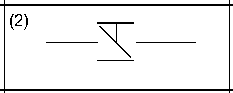
DAMPER — ClassOfFunctionalObject
Definition text hidden (copyrighted standard) — sign in to view, or follow the source link above.
cfihos V2.0
damper — AbstractTagAndEquipmentClass
Definition text hidden (copyrighted standard) — sign in to view, or follow the source link above.
Damper — Class
Definition text hidden (copyrighted standard) — sign in to view, or follow the source link above.
Provenance tiers (3)
Sources the pipeline cited while building this entry. Verbatim = the quote was copied word-for-word from that source; summary = paraphrased.
OWL/Turtle preview
Download .ttl
Numeric
COPI_* IRIs from copi-iri-map.tsv, with the readable name as a trailing comment. Names not yet in the map stay readable.
Loading...
ID 144 · claude-sonnet-4-20250514
Created 2026-04-16 11:49
Updated 2026-09-08 12:26